Concrete Contractor · Fort Worth, TX
Concrete Steps & Stairs in Fort Worth, TX
Concrete & Paving South Fort Worth has spent 15 years coordinating concrete steps and stairs for homeowners and property managers across the south side of the metro — poured front steps, porch landings, stair repair and resurfacing, and handrail-ready rebuilds built to code. Call (817) 207-5313 and the crews we coordinate with handle everything from demolition of a failing stoop through the final broom-finished tread, on a schedule built around your entryway.
Front steps are the first thing a visitor, delivery driver, or appraiser sees before they ever reach the door, and on Tarrant County's expansive black-gumbo clay they're also one of the most common trip hazards on a property. The Cretaceous Eagle Ford and Woodbine clay under Fort Worth, Benbrook, and the rest of the south side swells wet and shrinks hard through the dry Texas summer, moving several inches a year and pulling stoops and steps loose from the slab or foundation they're supposed to be tied to when the footings were never poured deep enough to begin with.
This page covers new poured steps, stoop rebuilds, and stair repair specifically. General slab cracking and settlement across a driveway, patio, or garage floor is covered on concrete repair, and a walkway leading up to the entry is covered on sidewalks & walkways — steps are their own structural scope with their own footing and code requirements, which is why they get their own page.
When Fort Worth homeowners choose us for concrete steps and stairs, they're getting footings poured below the seasonal heave line, rebar dowelled into the existing foundation, slip-resistant broom finishes, and handrail-ready posts set to code from the first pour — an entryway built to stay level and safe for the next fifteen years, not just the next one.
What We Do
Our Concrete Steps & Stairs Services in Fort Worth
Every entryway carries a different load and makes a different first impression, so poured front steps, porch landings, and stair rebuilds each get scoped to the structure they're tied to and the code they need to meet.

Poured Front Steps & Entry Stoops
A new front stoop or set of poured steps typically ties into the existing foundation or a new footing poured below the frost and heave line, with rebar dowelled into the slab so the steps move with the house instead of pulling away from it. Broom-finished treads give slip resistance in rain or morning dew, and riser height and tread depth get set to match your existing door threshold.
Most poured front-step jobs take about 1 to 2 days on site, form-to-finish, and price using the same $5 to $10 per square foot flatwork rate as other plain concrete work — scaling with the number of steps and the width of the stoop rather than a flat per-step fee.
Porch Steps & Landings
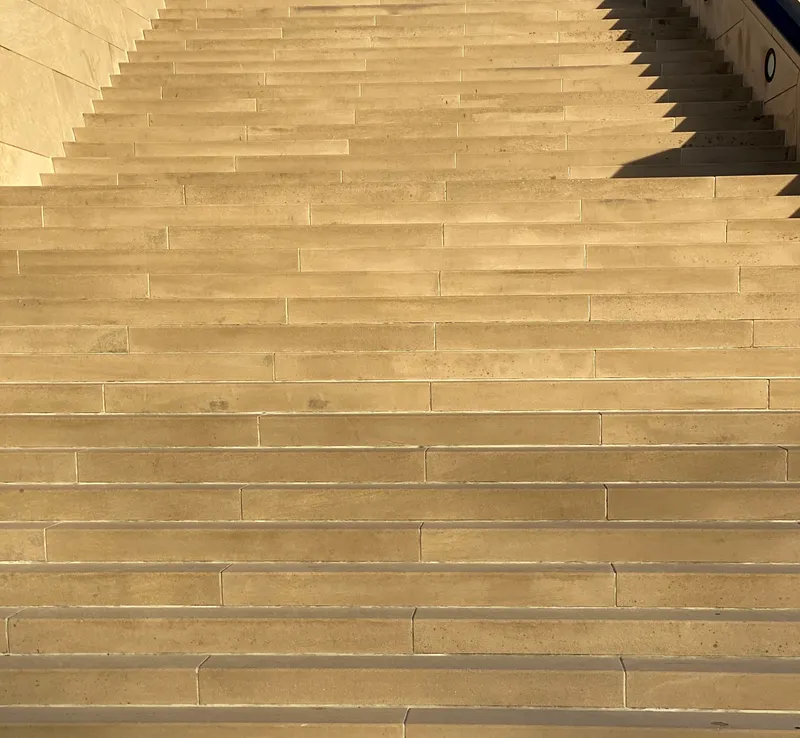
Covered porches need a landing pad sized to the door swing plus steps down to grade, tied into the porch framing or an existing slab rather than poured as a separate piece that can settle at a different rate than the house. Landings get sloped slightly away from the threshold so water sheds instead of pooling against the sill.
On expansive clay, a porch landing poured without its own footing is one of the most common settlement complaints we see — it can drop a half-inch out of level from the house in a single dry summer, which correct footing depth and reinforcement are built to prevent.
Stair Repair, Resurfacing & Handrail-Ready Rebuilds
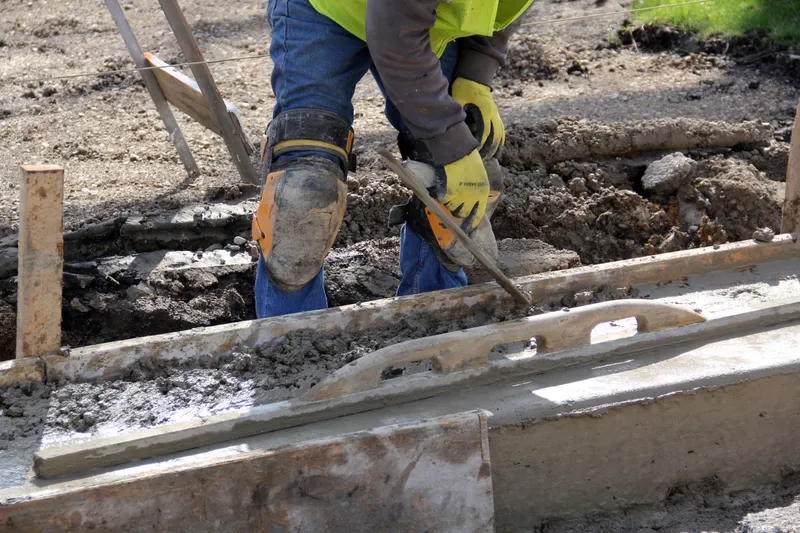
Spalled treads, cracked risers, and steps that have settled unevenly get evaluated for repair or resurfacing versus a full tear-out — a shallow overlay can restore a structurally sound set of steps, but steps that have separated from their footing usually need to come out and get repoured. Either path extends the life of an entryway that's still sound underneath the surface damage.
New and rebuilt steps get handrail-ready posts and blockouts set during the pour rather than drilled in afterward, so a code-required rail on a stairway of three or more risers goes in flush instead of anchored into concrete that was never built to carry it.
The Benefits
Why a Properly Poured Entryway Pays Off in Fort Worth
Front steps take more foot traffic and more weather exposure than almost any other slab on the property, so getting the footing, reinforcement, and finish right the first time keeps an entryway safe and level for years.
A Safer First Impression
Uneven or settled steps are a documented trip hazard, and a front entry is the one part of a property nearly every visitor, delivery driver, and inspector walks across. A slip-resistant broom finish, correctly sized risers, and level treads cut that risk immediately, and it's the first detail a buyer or appraiser notices walking up to the door — curb appeal and liability handled by the same pour.
Footings Built for Expansive Clay
Steps poured without a proper footing below the seasonal moisture zone are the most common reason stoops in Fort Worth and Benbrook crack loose from the house within a few years. Footings poured to the correct depth, with rebar dowelled into the existing foundation, let the steps move with the structure instead of against it as the black-gumbo clay swells and shrinks — the difference between a stoop that lasts fifteen years and one that needs redoing by year five.

Code-Ready for Handrails and Inspection
Most residential codes require a graspable handrail once a stairway rises past a set number of steps, and retrofitting a rail into concrete that was never designed for it usually means an ugly surface-mounted bracket or a cracked tread. Setting blockouts and anchor points during the original pour means the rail goes in flush and structurally sound, which matters at final inspection and matters even more the first icy morning someone actually needs to grab it.
Why Us
Why Fort Worth Chooses Us for Concrete Steps & Stairs
Fifteen years of pouring entryways on North Texas's toughest soil means footings go in right the first time.
ACI-Trained Finishers, Not a Side Job
The crews coordinated here work to ACI flatwork finishing standards and treat steps as a structural pour, not a quick add-on to a bigger driveway job. That means proper footing depth, dowelled rebar, and correctly spaced control joints on every set of steps, whether it's a single stoop or a full porch rebuild with a landing.
Local Experience With South Fort Worth Clay
Fifteen years of pouring on the same Eagle Ford and Woodbine clay that underlies Fort Worth, Benbrook, Forest Hill, and Crowley means footing depth and reinforcement get sized for how far this soil actually moves, not a generic spec pulled from a different region's building code.
Fixed Quotes, Honest Repair-vs-Replace Calls
Every steps job gets a written, itemized quote after an on-site look at the footing and any cracking, so there's no guessing at what a stoop rebuild or handrail retrofit costs. When a repair genuinely extends the life of existing steps, that's the recommendation — a full tear-out only gets proposed once the footing itself has failed.
Already dealing with a slab that's cracking or settling somewhere else on the property, not just the front steps? Concrete repair covers cracking, spalling, and settlement across driveways, patios, and other flatwork, and a walkway leading up to the entry falls under sidewalks & walkways. For the complete list of what gets coordinated across Fort Worth, Benbrook, Forest Hill, and Crowley, see our services — it's the same South Fort Worth concrete crew network behind every job on this page.
Frequently Asked Questions
How much do new concrete steps or a front stoop cost in Fort Worth?
Poured concrete steps and stoops price out using the same $5 to $10 per square foot flatwork rate as other plain concrete work, with the total scaling on the number of risers, tread width, and whether a footing has to be excavated below grade. A simple 3-step stoop usually runs toward the lower end of that range, while a wider porch landing with multiple steps and a handrail blockout costs more. Decorative broom or stamped finishes add to the base rate. We quote an exact number after an on-site look at the entryway rather than a phone estimate.
How long before I can use new concrete steps?
Light foot traffic is generally fine after 24 to 48 hours once the surface has set and cooled, but the concrete only reaches about 70% of its design strength at 7 days under the industry's '70-in-7' curing rule. Full design strength arrives at 28 days, which matters more for steps carrying heavy repeated loading than for a typical residential entry. Cure slows noticeably below 50°F, so a winter pour needs a longer wait before regular use than one poured in warm weather.
Why do concrete steps crack or pull away from the house in Fort Worth?
Tarrant County sits on expansive black-gumbo clay from the Cretaceous Eagle Ford and Woodbine formations, with clay content frequently exceeding 50%, and that soil swells when wet and shrinks hard through a dry Texas summer. Steps poured without a footing set below that seasonal moisture zone, or without rebar dowelled into the existing foundation, move independently of the house they're attached to and eventually crack or separate at the joint. Proper footing depth and reinforcement are what let a stoop move with the structure instead of against it.
Does a handrail have to be code-compliant on new concrete steps?
Most residential building codes require a graspable handrail once a stairway rises past a set number of risers, and the rail has to be anchored into something structurally capable of carrying real load, not just decorative concrete. Setting blockouts or anchor sleeves during the original pour lets the rail post go in flush and solid, which matters at final inspection and holds up better than a bracket drilled into finished concrete later. We build new and rebuilt steps handrail-ready from the start so a code-required rail is never an afterthought.
Should I repair my existing steps or have them replaced?
Spalled or lightly cracked treads on steps that are otherwise level and structurally sound are usually a good candidate for repair or resurfacing rather than a full tear-out, which saves both time and cost. Steps that have visibly separated from the house, rocked underfoot, or settled unevenly at the footing level typically mean the foundation beneath them has already failed, and a repair on top of that won't hold. We make that call on site by checking whether the footing itself is still solid, not by the age of the concrete alone.
What makes steps slip-resistant, and can existing steps be resurfaced to add grip?
A broom finish drawn across the wet concrete while it's still workable creates fine texture ridges that give real traction in rain, morning dew, or icy conditions, which is standard on any new poured steps here. Existing smooth-troweled steps that have become slick with age or wear can often be resurfaced with a thin overlay and a fresh broom or textured finish rather than demolished and repoured. That resurfacing option only works if the base concrete underneath is still structurally sound, which gets checked before it's recommended.
Do I need a permit to pour new steps or rebuild a stoop in Fort Worth?
Requirements vary by city — Fort Worth, Benbrook, Forest Hill, and Crowley each run their own building or permitting department, and whether a stoop or step rebuild needs a permit often depends on whether it changes the footprint, height, or structural attachment to the house. A straightforward like-for-like repair may not trigger the same review as a new landing or a stoop that's being widened. We confirm what the specific address requires before work starts so nothing holds up an inspection later.
How thick and reinforced do concrete steps need to be?
Steps are typically poured as a monolithic structure tied to a footing rather than a thin slab, with rebar dowelled into the existing foundation or slab so the whole assembly moves as one piece under seasonal clay movement. Reinforcement spec depends on the number of risers, the span, and whether the steps are freestanding or tied into a porch structure. Skimping on footing depth or reinforcement is the most common reason steps crack loose within a few years on Tarrant County clay rather than lasting the 15-plus years a properly built set should.
What's the best time of year to pour new concrete steps?
Concrete cures best above 50°F, so spring through fall generally gives the most predictable results in North Texas, though steps can be poured in cooler weather with extra cure time and protection built in. Placing concrete during a heavy rain interferes with finishing and can weaken the surface before it sets. We schedule around the forecast for the specific address rather than locking in a fixed date, which is part of why calls come in 24 hours a day.
Can new steps be matched to my existing driveway, patio, or porch finish?
Yes — broom finish, smooth trowel, exposed aggregate, or a stamped and colored finish can all be matched to whatever's already on the property so a new stoop or step rebuild doesn't read as a patch job. Matching an older finish sometimes means blending a slightly different color or texture since concrete weathers and lightens over the years, which gets accounted for before the pour rather than after. We review finish and texture options on site so the new steps sit naturally next to the rest of the property.
Get Your Concrete Steps or Stoop Scheduled
Front steps, porch landings, and stair repair — footings built for clay, broom-finished for grip. Call (817) 207-5313, 24 hours a day.
(817) 207-5313