Concrete Contractor · Fort Worth, TX
Concrete Slabs & Foundations in Fort Worth, TX
Concrete & Paving South Fort Worth coordinates concrete slabs and foundations for homeowners, builders, and property owners across Forest Hill, Benbrook, Crowley, and the wider Fort Worth metro — 15 years of local concrete coordination, with calls answered 24 hours a day at (817) 207-5313. This page covers the structural side of the business: monolithic slabs, shed and equipment pads, garage and shop slabs, and footings and foundations — work that carries a building's load rather than just giving someone a place to walk or park. That distinction changes almost everything about how the job gets built. A cracked patio is a cosmetic fix; a foundation that settles unevenly can crack drywall, bind doors and windows, and threaten whatever structure sits on top of it. So on this page, reinforcement, compressive strength, and base prep aren't finishing touches — they're the decisions that determine whether the structure above holds up for decades or starts fighting the ground underneath it within a year or two.
Load-bearing concrete work has one obstacle in South Tarrant County that flatwork can mostly shrug off: the expansive 'black gumbo' clay under Forest Hill, Benbrook, and Crowley, weathered from the Cretaceous Eagle Ford and Woodbine formations, with clay content that frequently exceeds 50%. That clay swells hard when it's saturated and shrinks through the dry Texas summer, moving several inches seasonally whether or not anything is built on top of it. On a driveway or a walkway, that movement shows up as a hairline crack you can live with. Under a garage slab or a footing carrying wall loads, the same movement can telegraph straight into the structure — which is exactly why base prep, compaction, correct reinforcement, and moisture control matter more here than on almost any other concrete job on the property.
This page covers new slab and foundation construction specifically — monolithic pours, equipment and shed pads, garage and shop slabs, and footed foundations built to carry a structure's load. If the job is a driveway or private walkway instead, that scope is covered on concrete driveways; a commercial slab, parking lot, or loading area for a business property is covered on commercial concrete. New structural work is a different job with a different engineering standard than either of those, and it's the one this page is built around, coordinated for property owners from Forest Hill down through Crowley.
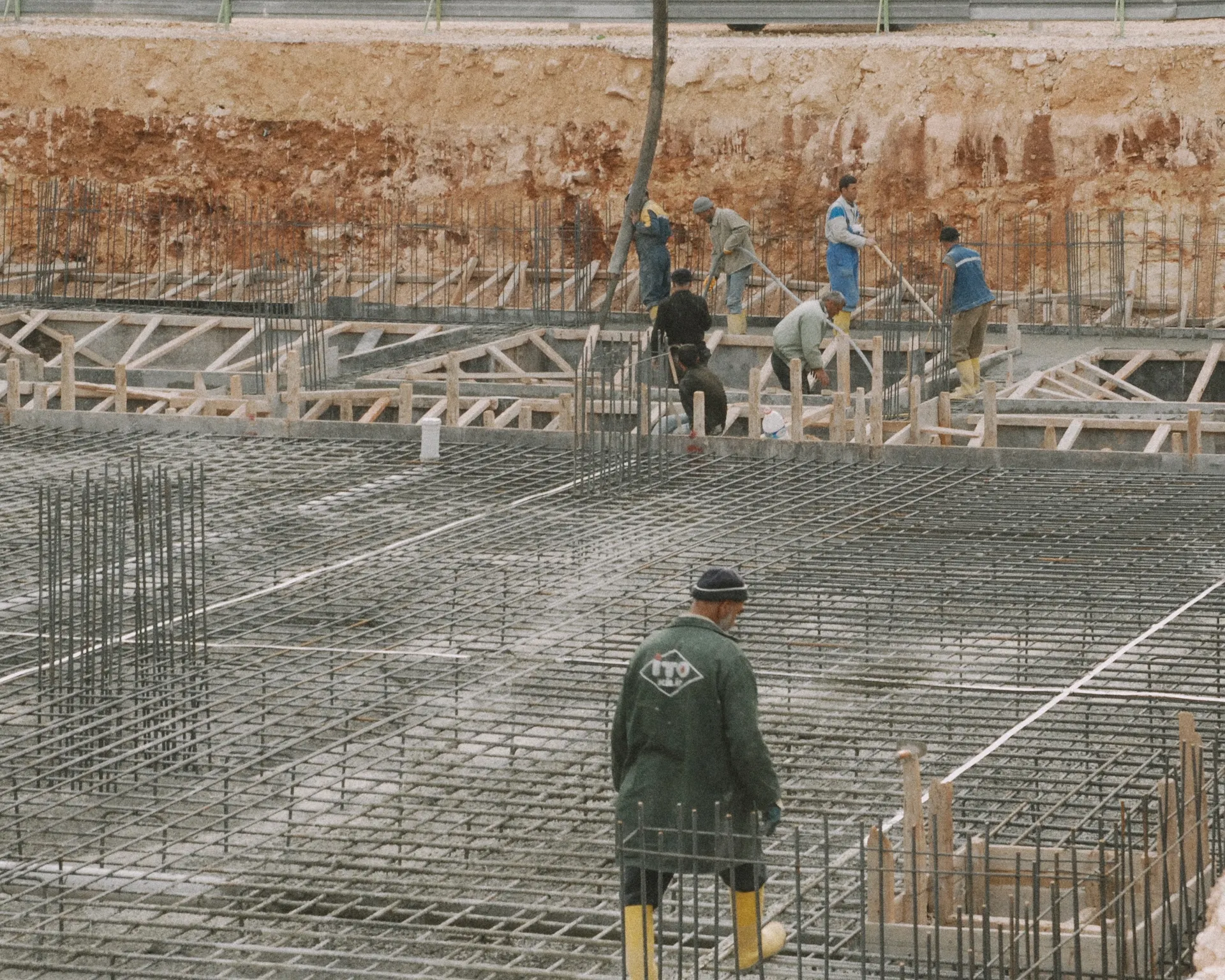
A slab or foundation job runs through the same sequence every time: evaluate the site, soil, and the load the structure will carry, excavate and compact the subgrade, place a vapor barrier where moisture control matters, set forms and reinforcement — rebar or welded-wire mesh depending on the load path — then pour to the specified PSI and finish and cure to design strength. The coordinated crews work to ACI 318 and ACI 332 residential concrete standards, and every pour follows the same strength curve: roughly 70% of design strength at 7 days, full design strength at 28 days, which is why nothing gets built on top of a new slab or footing before that cure window closes.
What We Do
Our Concrete Slab & Foundation Services in Fort Worth
Structural concrete isn't one job — a shed pad, a garage slab, and a footed foundation each carry a different load and need a different reinforcement plan. Here's how the coordinated crews scope each one.
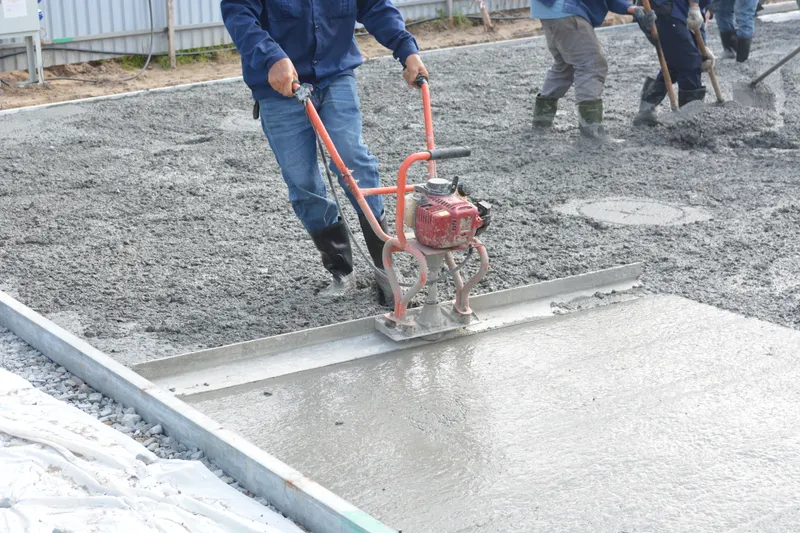
Monolithic Slabs & Equipment Pads
A monolithic slab pours the footing and floor as one continuous piece, which works well for detached garages, workshops, and outbuildings on a stable, well-compacted base. Equipment pads for HVAC condensers, generators, or hot tubs follow the same logic at a smaller footprint — welded-wire mesh sized for the load, poured over compacted base and a vapor barrier where moisture is a factor.
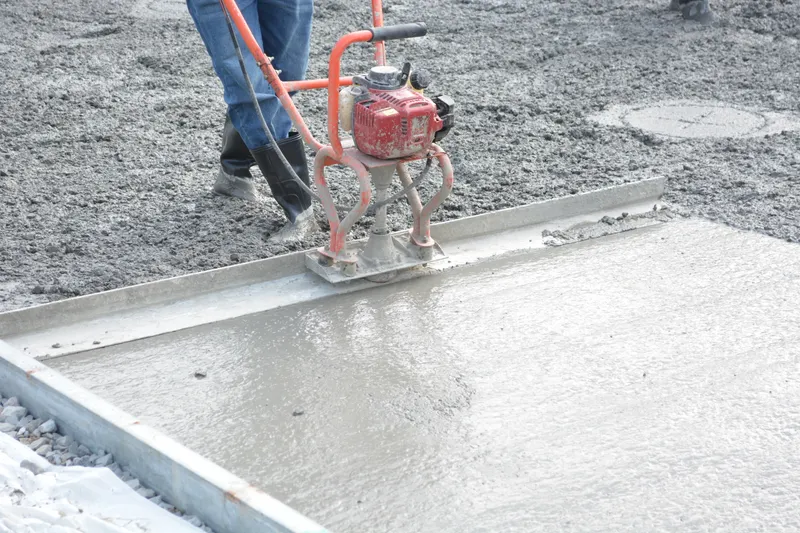
Garage & Shop Slabs
A garage or shop slab carries vehicle weight and often heavier point loads than a driveway — lift equipment, workbenches, stored materials — so thickness and reinforcement get specified to actual use, not a generic minimum. Rebar is typical where the slab needs to resist bending under concentrated loads, poured to a higher PSI and finished for the traffic it'll see.
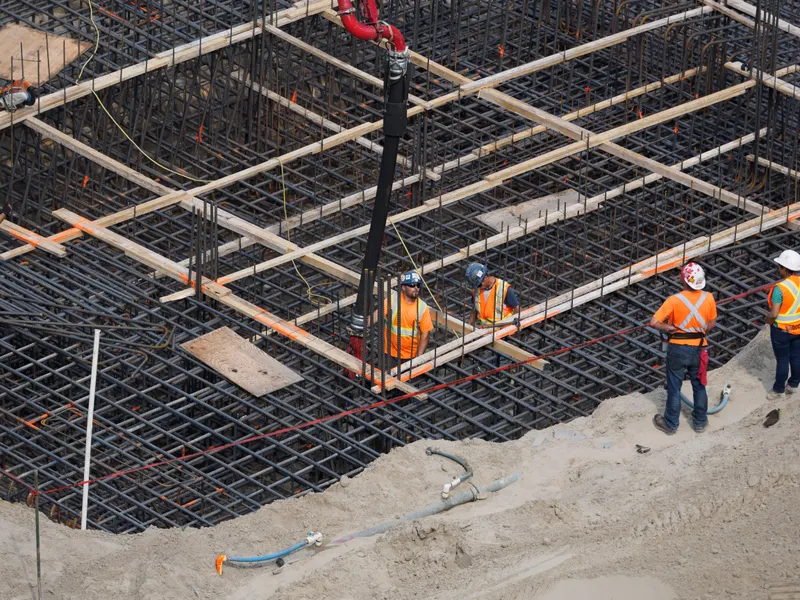
Footings & Foundations
Footings carry wall and structural loads down to bearing soil, and on South Tarrant County's expansive clay that means footing depth and reinforcement get engineered to resist seasonal heave, not just poured to a standard depth and hoped for. Rebar placement, footing width, and PSI follow ACI 332 guidance, adjusted for the specific structure and soil on site.
The Benefits
Why Proper Reinforcement Pays Off in Fort Worth
A slab or foundation is only as good as what's inside it and underneath it. Getting reinforcement, base prep, and moisture control right the first time is what keeps structural concrete from becoming a warranty call.
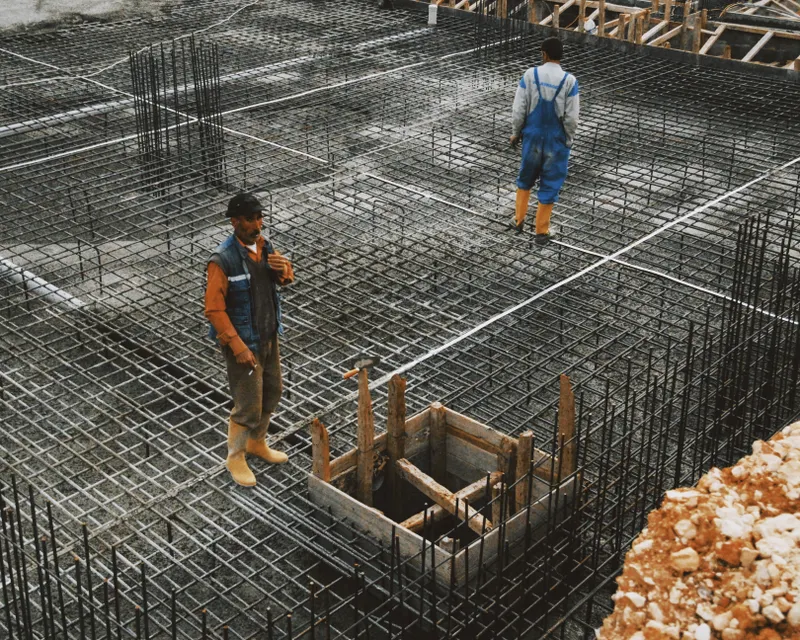
Reinforcement Built for Black Gumbo Clay
Welded-wire mesh resists surface cracking on lighter loads like equipment pads, while rebar carries tensile load through footings, garage slabs, and anywhere weight concentrates. The coordinated crews spec which one a pour needs rather than defaulting to whichever is cheaper, because the wrong reinforcement on expansive clay shows up as cracking within a season or two.
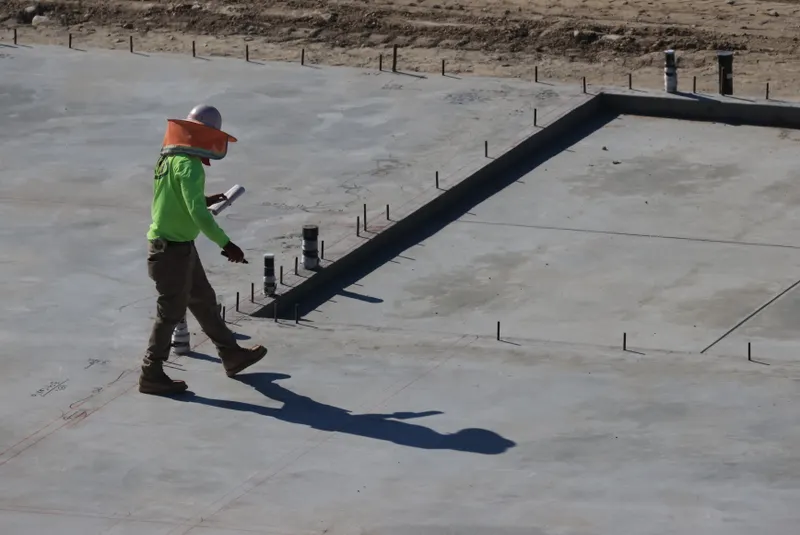
Poured to ACI 318/332 Standards
ACI 318 governs structural concrete design broadly and ACI 332 sets residential-specific requirements for footings, foundations, and slabs-on-grade — minimum PSI, reinforcement placement, control-joint spacing. Building to those standards, rather than a generic pour, is what lets a footing or garage slab carry its design load for decades on Tarrant County's shifting clay.
Moisture Control That Protects What's Built On Top
A vapor barrier under a slab keeps ground moisture from wicking up through the concrete into flooring, framing, or stored equipment above it — a real issue on clay soil that holds water after every rain. Combined with drainage grading around the perimeter, moisture control is one of the cheapest structural decisions on the job and one of the most expensive to fix afterward.
Why Us
Why Fort Worth Chooses Us for Slabs & Foundations
Fifteen years of coordinating structural concrete on North Texas's toughest soil means reinforcement and base prep get engineered before a single yard of concrete is ordered.
Structural Work, Not Just Flatwork
Some outfits treat every pour the same regardless of what it's carrying. The crews coordinated here scope monolithic slabs, garage floors, and footings as load-bearing engineering decisions — reinforcement type, PSI, and footing depth specified to the actual structure — because a foundation sized for a shed and a foundation sized for a workshop are not the same job.
Base Prep and Compaction Tested, Not Eyeballed
Under-compacted subgrade is invisible on pour day and expensive the year a slab settles unevenly. The coordinated crews compact the base to target density and set forms level before reinforcement ever goes in, because a soft spot under a foundation telegraphs straight into the structure once the clay underneath starts moving.
Scheduled Around the Cure Window
A slab that carries traffic or structural load too early on the strength curve risks cracking before it ever reaches design strength. Calls come in 24 hours a day at (817) 207-5313 so scheduling can account for the full 70-in-7, full-at-28-days cure window rather than rushing a structural pour to hit a deadline.
Not sure whether this page is the right fit for the job you're planning? If it's a driveway or walkway rather than a structural pour, concrete driveways covers that scope; if it's a commercial slab, parking lot, or loading area for a business property, commercial concrete is the better starting point. For the full list of what gets coordinated across Forest Hill, Benbrook, Crowley, and the rest of the South Fort Worth metro, see our services — it's the same South Fort Worth concrete crew network behind every structural pour on this page.
Frequently Asked Questions
How much does a concrete slab or foundation cost in Fort Worth?
Plain poured slabs typically run $5 to $10 per square foot installed, though footings and foundations price by the structure, not square footage. Reinforcement type, footing depth, and subgrade compaction on South Tarrant County's expansive clay all move the number. A shed pad prices far below a garage slab or footed foundation, since the engineering differs completely. We quote after an on-site evaluation, not a phone estimate.
What's the difference between rebar and welded-wire mesh reinforcement?
Rebar is steel bar reinforcement that carries tensile and bending loads, typically used in footings, foundations, and garage or shop slabs under real structural stress. Welded-wire mesh is a lighter steel grid that controls surface cracking on lighter-load pours like equipment pads and walkways. The coordinated crews specify which one a pour needs per ACI 318/332 guidance, since under-reinforcing a load-bearing slab is a common cause of early cracking.
What PSI concrete do I need for a slab or foundation?
Residential slabs and foundations typically spec 3,000 to 4,000 PSI concrete, with garage and shop slabs carrying vehicle or equipment loads often at the higher end. Footings and structural foundations follow ACI 332 guidance, which ties minimum PSI to load path and exposure rather than one flat number. Air-entrained mixes are used where freeze-thaw exposure is a factor. We spec PSI to the structure during the quote, not a one-size-fits-all mix.
How long before I can build on a new slab or foundation?
Concrete reaches roughly 70% of its design strength at 7 days and full design strength at 28 days, the industry-standard '70-in-7' curve that governs every structural pour. Light work like framing layout can often start once the slab bears foot traffic, but full structural loading — walls, heavy equipment, a vehicle lift — should wait for the full 28-day cure, which can extend during a cold snap. We build the schedule around the actual cure timeline, not a fixed date.
Do I need a permit to pour a slab or foundation in Fort Worth?
It depends on which city the property sits in. Forest Hill routes slab and foundation work through its Permits & Applications department, Benbrook through Building Inspections, and Crowley through Development Services / Building Inspections — not one shared Tarrant County office. A footed foundation or garage addition is far more likely to need a permit and inspection than a simple equipment pad. We confirm what's required before work starts.
Why does a vapor barrier matter under a slab?
A vapor barrier — poly sheeting placed under the slab before the pour — blocks ground moisture from wicking up into flooring, framing, or anything stored on top. South Tarrant County's clay holds water after rain and releases it slowly, so a slab without one can stay damp underneath long after the surface looks dry. It's a low-cost addition during the pour and a much costlier problem to fix afterward.
What's the difference between a monolithic slab and a footed foundation?
A monolithic slab pours the footing and floor as one continuous piece, which works well for garages, workshops, and outbuildings on a stable, compacted base. A footed foundation pours separate footings first, sized to carry wall loads to bearing soil, then builds the floor or framing on top afterward. Footed foundations are typically specified where the structure is larger or soil conditions call for reinforcement below standard slab depth.
How thick does a shed or equipment pad need to be?
A typical shed or equipment pad runs 4 inches thick with welded-wire mesh reinforcement over a compacted base, adequate for the light, distributed loads those structures put on the ground. Larger equipment — a generator, an HVAC condenser bank, or heavier storage — can call for a thicker pour or rebar instead of mesh, depending on load and footprint. We size the pad to the equipment or structure going on it, not a generic 4-inch slab.
How thick should a garage or shop slab be?
Most residential garage slabs run 4 to 6 inches thick, with shop slabs carrying heavier equipment or vehicle lifts often specified at the thicker end or with added rebar. The correct thickness depends on what the slab will actually carry — a two-car garage floor and a shop slab rated for a lift and storage racks are not the same problem, even though they look similar poured. We spec thickness and reinforcement to the intended use.
What standards govern slab and foundation work in Fort Worth?
ACI 318 sets structural concrete design requirements broadly, while ACI 332 covers residential-specific requirements for footings, foundations, and slabs-on-grade, including minimum PSI, reinforcement placement, and control-joint spacing. Ready-mixed concrete itself is specified to ASTM C94. Building to those standards rather than an informal pour is what keeps a footing or garage slab performing to its design load for decades on Tarrant County's expansive clay, and it's the standard the coordinated crews work to on every structural job.
Should I pour a slab foundation or build pier-and-beam for a new structure?
A poured slab foundation is generally less expensive and faster to build than pier-and-beam, and it's the standard choice for garages, shops, and most single-story additions on a stable, well-prepped base. Pier-and-beam creates a crawl space and can be preferable on sites with significant grade change or drainage challenges that make a slab-on-grade riskier without extensive base work. On South Tarrant County's expansive clay, the right call depends on the site, which is why we evaluate soil first.
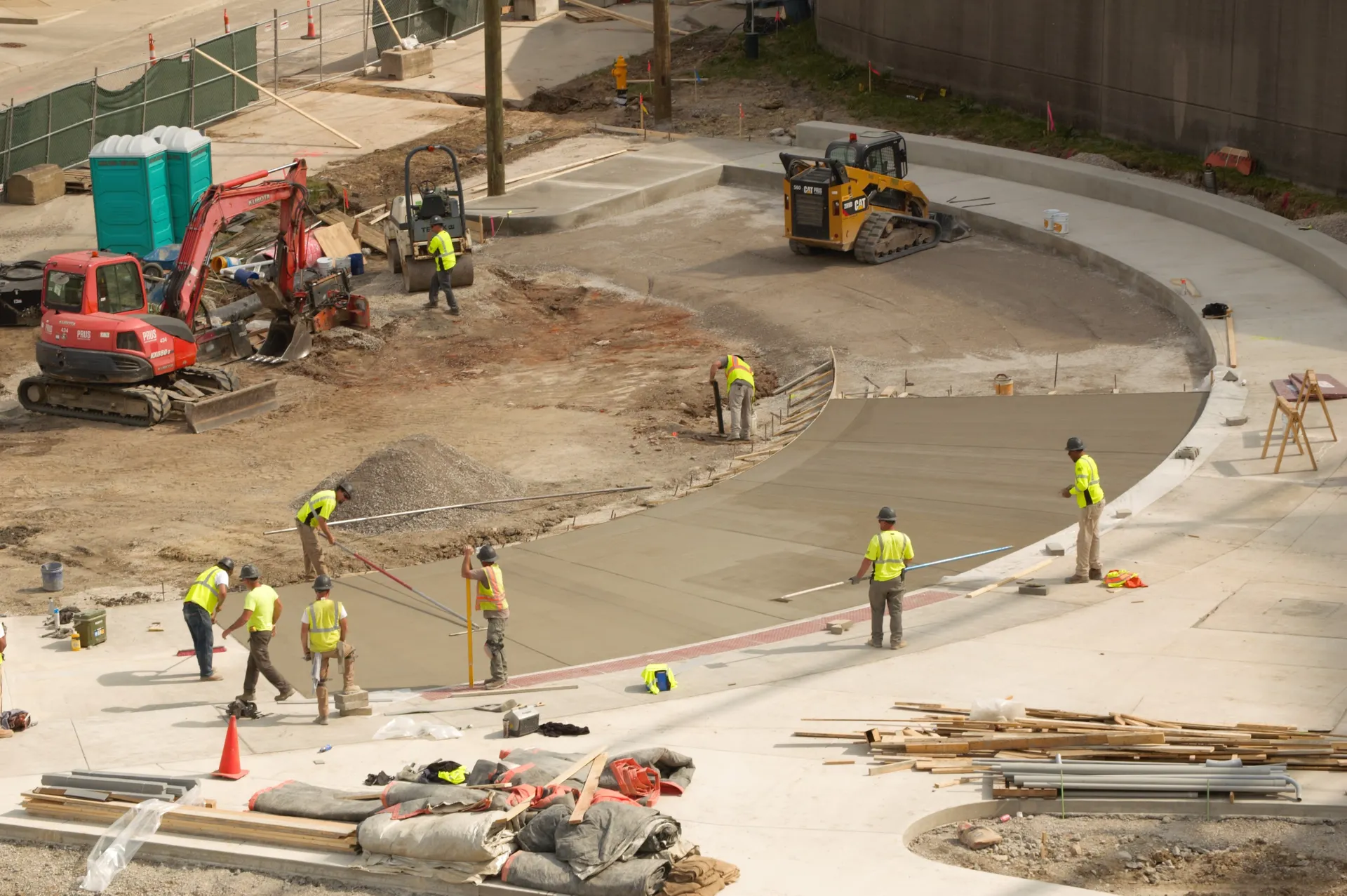
Get Your Concrete Slab or Foundation Scheduled
Monolithic slabs, equipment pads, garage and shop slabs, footings and foundations — reinforced and poured to ACI standards. Call (817) 207-5313, 24 hours a day.
(817) 207-5313