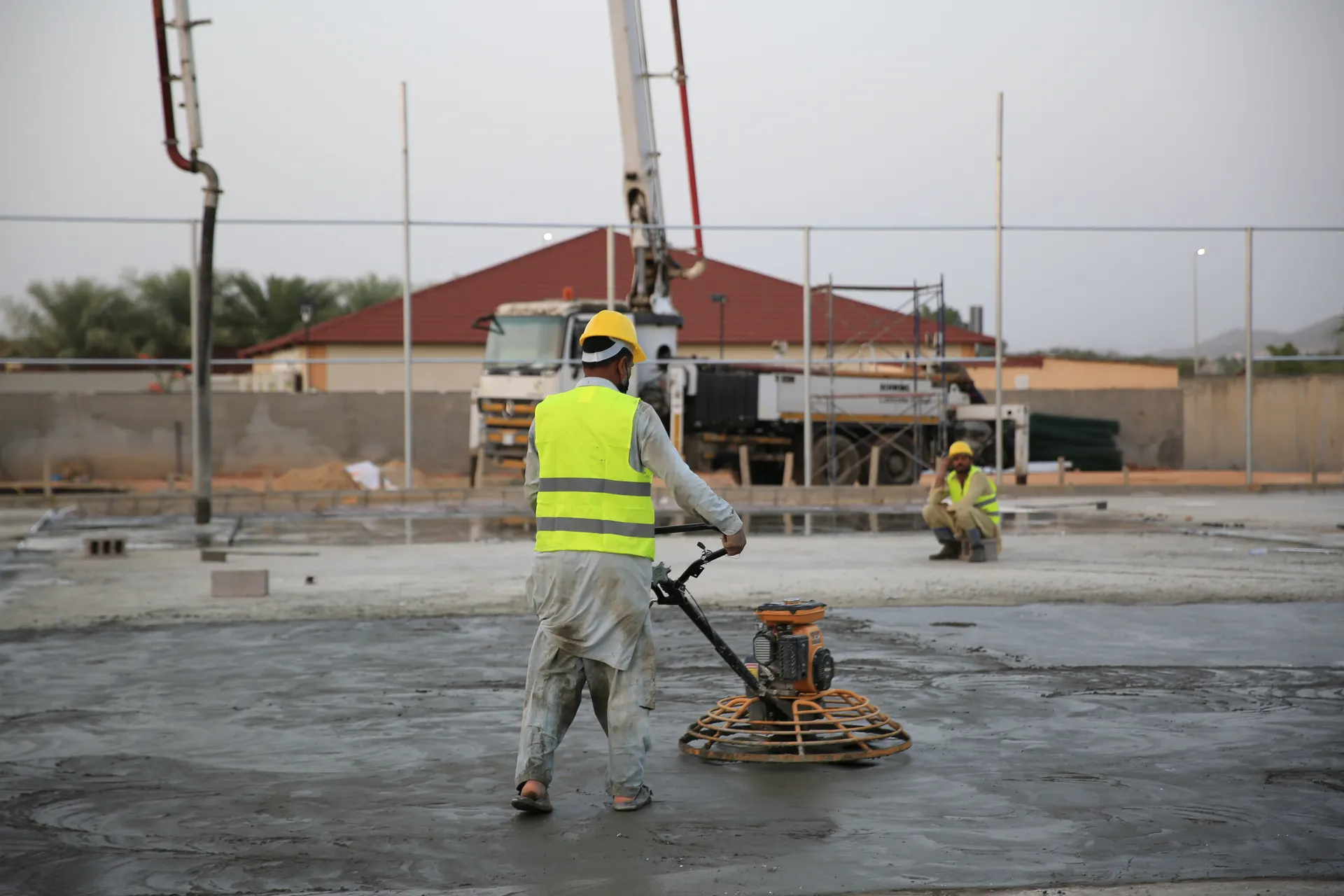
Concrete Contractor · Fort Worth, TX
Commercial Concrete & Parking Lots in Fort Worth, TX
Concrete & Paving South Fort Worth coordinates commercial concrete and parking lot paving for property managers, retail owners, and general contractors across Forest Hill, Benbrook, Crowley, and the wider Fort Worth metro — 15 years of local coordination, with calls answered 24 hours a day at (817) 207-5313. Commercial work runs at a different scale than a residential driveway: a retail lot, dock apron, or multi-tenant flatwork has to carry loaded delivery trucks and daily traffic, not just a couple of passenger cars, and stay ADA-compliant from the first ramp to the last stripe.
Scale changes the engineering, and so does what's underneath it. Tarrant County's commercial corridors along the South Freeway (I-35W) and US-287 sit on the same expansive 'black gumbo' clay that runs under the rest of the metro — high-plasticity soil weathered from the Cretaceous Eagle Ford and Woodbine formations that swells wet and shrinks through the dry Texas summer, moving several inches a year. A cracked residential patio is an inconvenience; a heaved parking lot panel or settled dock apron is a liability and a tripping hazard, which is why commercial flatwork gets designed to ACI 330 — the parking-lot-specific standard — rather than scaled up from residential specs.
This page covers commercial concrete and parking lot work specifically: new slabs and flatwork for retail, office, and industrial sites, parking lot paving and individual panel replacement, loading docks and dock aprons, and the ADA ramps and bollard pads that go with them. Structural pours like equipment pads and footings inside a larger commercial project get the deeper treatment on our concrete slabs page, and a lot with cracking, spalling, or settlement that doesn't need a full rebuild is a job for concrete repair instead. Property managers juggling both new construction and standing repairs can loop us in on both from one call.
Every commercial job runs through the same sequence: evaluate the site and traffic patterns, excavate and compact the subgrade, place a heavier aggregate base and reinforcement than a residential pour needs, then place, finish, and joint the concrete to ACI 330 spacing before curing and striping. Ready-mix isn't a boutique material here — the U.S. industry shipped an estimated 373 million cubic yards of it in 2025, and commercial lots and slabs account for a large share of that volume. Because a business can't just close for two weeks, work gets phased section by section so parking, deliveries, and foot traffic keep moving while the crews we coordinate with finish one zone at a time.
What We Do
Our Commercial Concrete Services in Fort Worth
Commercial concrete covers more ground than a single driveway pour — new flatwork, full lot paving, and the loading and accessibility features a business depends on every day. Here's how the coordinated crews scope each piece.
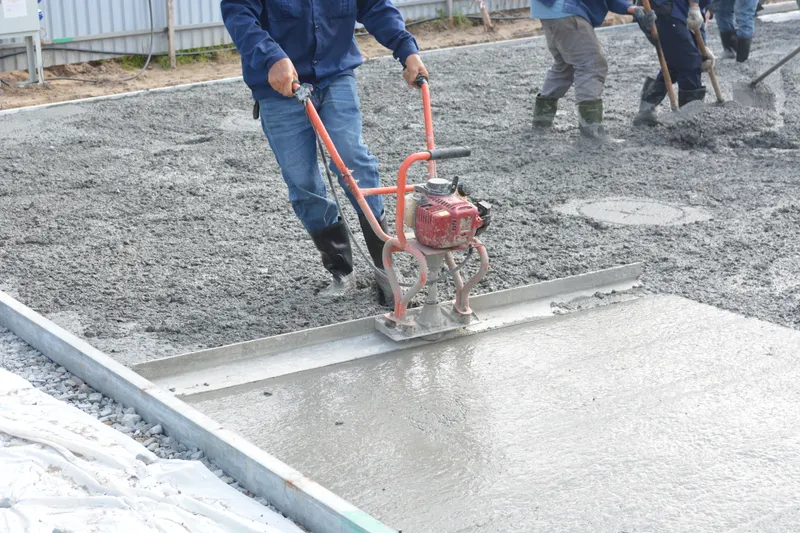
Commercial Slabs & Flatwork
New commercial slabs — retail pads, warehouse floors, equipment slabs, and building flatwork — typically run $5 to $10 per square foot and get poured with heavier reinforcement than a residential job, using rebar or welded-wire mesh sized to the load the floor will actually carry. Base prep gets the same attention as the pour itself: a compacted aggregate base rated for forklift and delivery traffic, because a floor that flexes under load cracks and spalls years before a properly engineered one does.
Jobs that lean more toward structural footings and equipment pads get the deeper page treatment on concrete slabs.
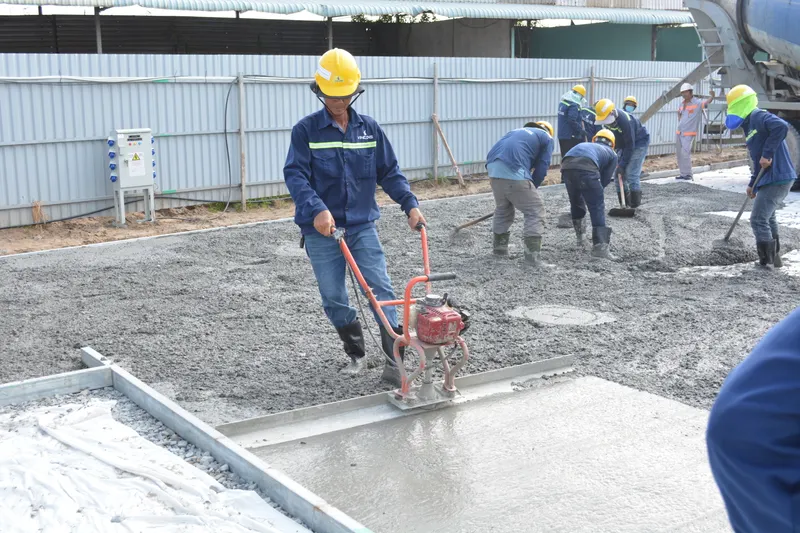
Parking Lot Paving & Panel Replacement
A new or resurfaced parking lot gets designed to ACI 330 — the industry standard for parking lot concrete — with layout that accounts for drainage slope, drive lanes, and the striping and ADA ramps that go in once the concrete cures. Where only sections of an existing lot have failed, individual panel replacement swaps out the damaged squares along their existing joints instead of tearing out a whole lot that's otherwise sound.
Lots with widespread cracking or spalling instead of isolated panel failure are usually a concrete repair scope.
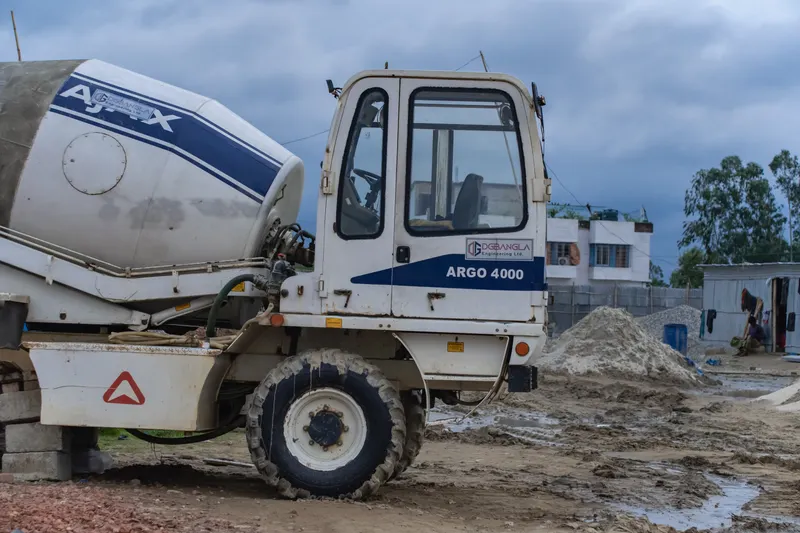
Loading Docks, Dock Aprons & ADA Access
Loading docks and dock aprons take the heaviest, most repetitive loading on a commercial site — delivery trucks backing in and out, forklifts crossing the same few feet of concrete hundreds of times a week — so they're built with thicker sections and tighter joint spacing than the rest of the lot. ADA ramps and bollard pads get poured to the same standard: correct slope, detectable warning surfaces, and striping that keeps accessible routes compliant from day one rather than retrofitted later.
The Benefits
Why Properly Engineered Commercial Concrete Pays Off
Commercial flatwork carries more weight, more traffic, and more liability than a residential pour. Getting the base, standards, and phasing right the first time is what keeps a lot or slab out of the repair budget for years.
Built to Carry Trucks on Expansive Clay
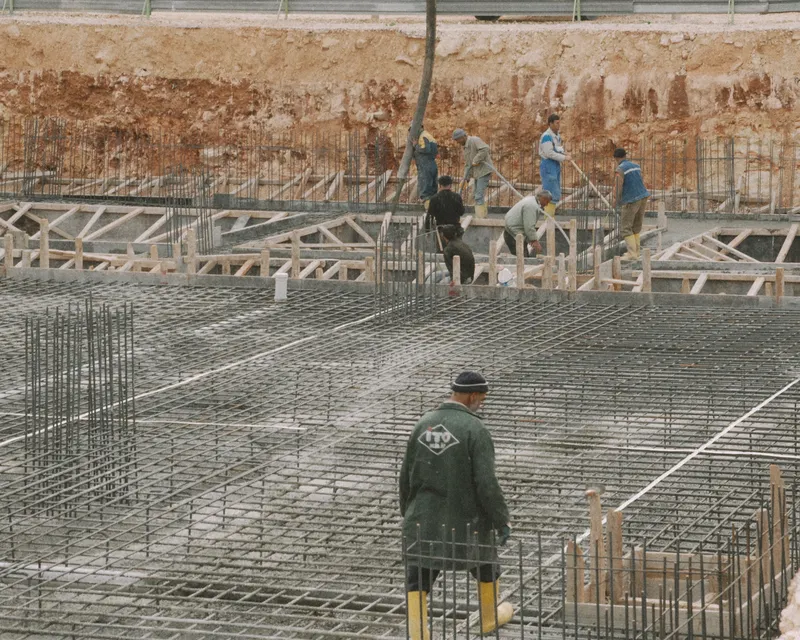
The South Freeway and US-287 commercial corridors sit on the same high-plasticity black gumbo clay as the rest of Tarrant County, and a fully loaded delivery truck or forklift puts far more stress on that shifting subgrade than a passenger car ever does. Rebar or welded-wire-mesh reinforcement sized to the actual load, plus a compacted base rated for commercial traffic, gives the slab enough structural integrity to flex with seasonal clay movement instead of heaving under the first heavy truck that crosses it.
Poured to ACI 330 & ADA Standards
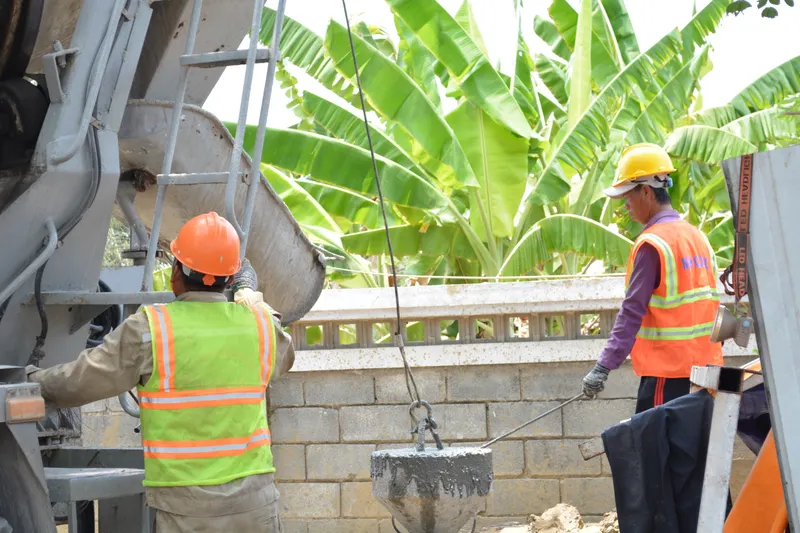
The coordinated crews design and pour commercial lots and flatwork to ACI 330, the American Concrete Institute's standard specifically for parking lot construction, rather than scaling up a residential mix and hoping it holds. ADA ramps, bollard pads, and accessible-route striping get built to the same code every time, so the property passes inspection and stays compliant instead of facing a retrofit bill later. That standards-first approach is also why ready-mix suppliers shipping an estimated 373 million cubic yards nationally in 2025 treat commercial mix design differently.
Phased Construction That Keeps Your Business Open
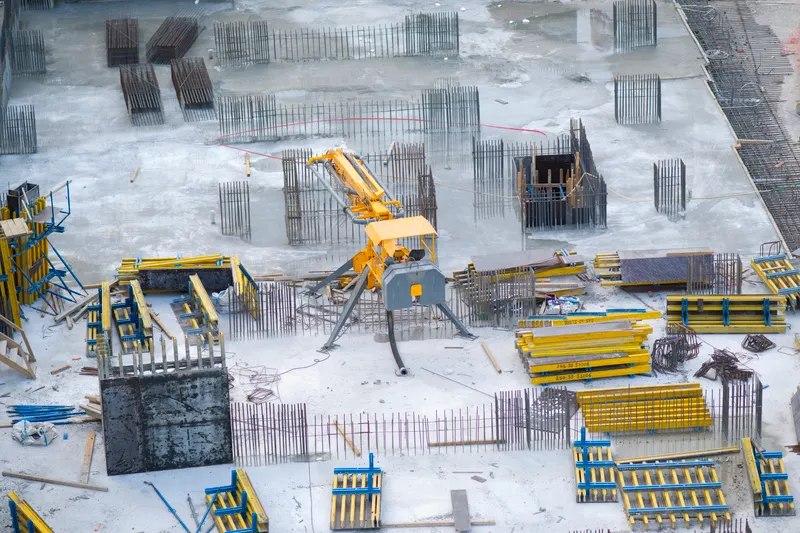
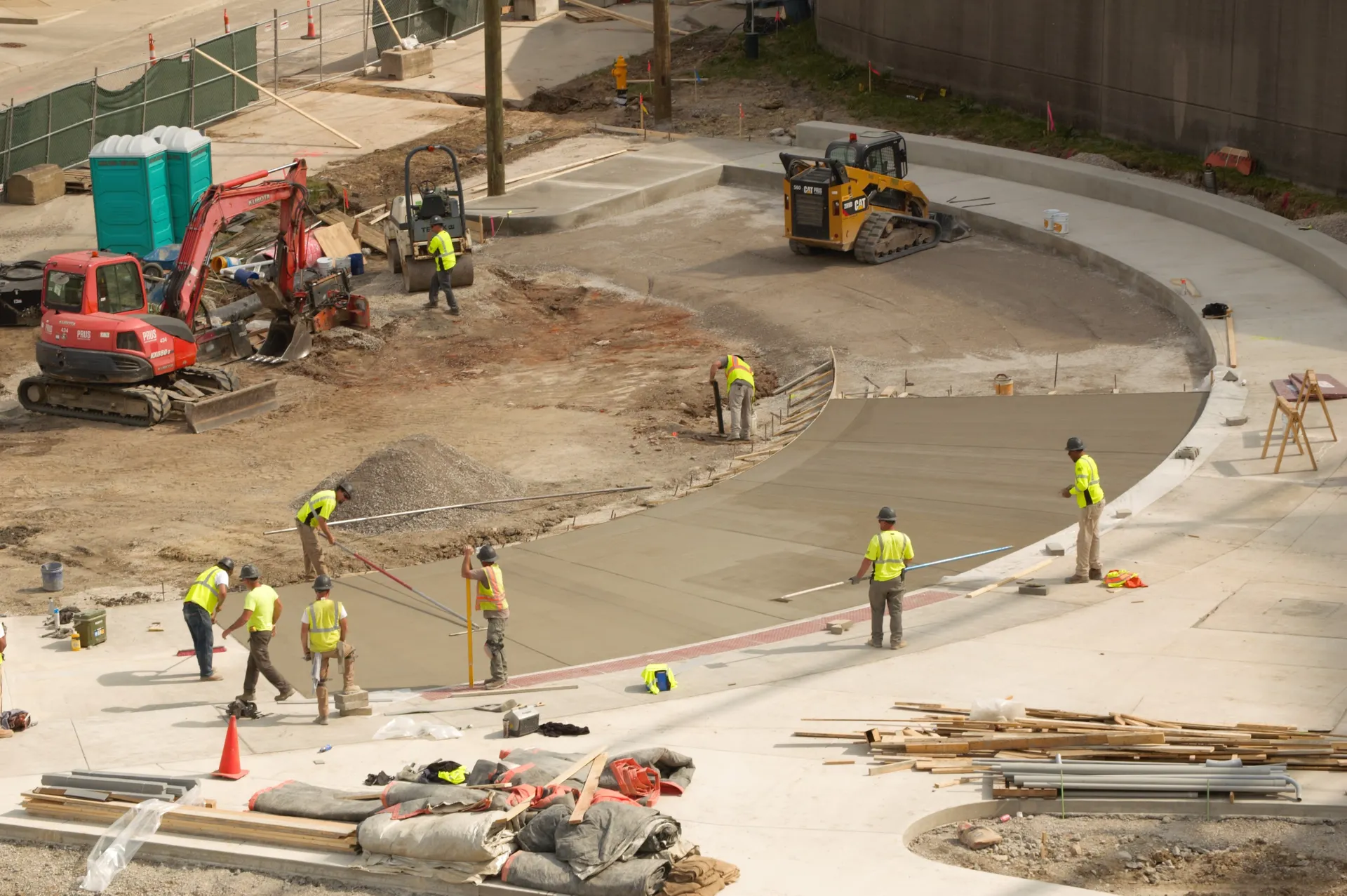
A retail lot, office property, or warehouse can't just close for two weeks while concrete cures, so commercial jobs get broken into sections — one drive lane, one dock, one quadrant of the lot at a time — so parking, deliveries, and customer access keep moving throughout the project. Property managers get a schedule up front showing which zones are closed and when, rather than discovering mid-project that half the lot is blocked.
Why Us
Why Fort Worth Property Managers Choose Us for Commercial Concrete
Fifteen years of coordinating commercial pours on North Texas's toughest soil means the base and the schedule both get built around keeping your business running.
Commercial Scope, Not a Residential Crew Scaled Up
Some concrete outfits treat a parking lot the same as a driveway with more square footage. The crews coordinated here scope commercial jobs to ACI 330 from the start — reinforcement, base depth, and joint spacing sized to truck and forklift loading — because a lot engineered for commercial traffic outlasts one built to residential specs and stretched thin.
Property-Manager Communication From Quote to Close-Out
Multi-tenant properties and retail sites need a point of contact who understands phased work, not just a poured slab. Scheduling, zone-by-zone timelines, and close-out documentation get handled directly with property managers and general contractors, so tenants and customers know exactly what's closed and when it reopens.
Scheduled Around Your Operating Hours
Concrete placed below 50°F cures more slowly, and a summer storm mid-pour can set a schedule back a day. Calls come in 24 hours a day so commercial jobs get scheduled around both the weather window and the property's actual operating hours, rather than a date that fights the forecast or shuts down business unnecessarily.
Not sure whether your project is new commercial construction or a repair to an existing lot? Structural pours like equipment pads and building footings get the deeper treatment on concrete slabs, and a lot with panel cracking, spalling, or settlement that doesn't need a full rebuild is a concrete repair job instead. For the full list of what gets coordinated across Forest Hill, Benbrook, Crowley, and the South Freeway (I-35W) corridor, see our services — it's the same South Fort Worth concrete crew network behind every job on this page.
Frequently Asked Questions
How much does commercial concrete or parking lot paving cost in Fort Worth?
Commercial flatwork typically runs $5 to $10 per square foot installed, with a lot's total cost scaling on square footage, base condition, and included drainage or ADA work. Ready-mixed concrete averages roughly $119 to $147 per cubic yard delivered — the raw-material baseline before labor and reinforcement. Larger lots see a lower cost per square foot than small pours. We quote after an on-site evaluation, not a phone estimate, since traffic load changes the scope.
What is ACI 330 and why does it matter for a parking lot?
ACI 330 is the American Concrete Institute's standard for parking lot design and construction, covering slab thickness, jointing, reinforcement, and base prep for the loads a lot carries. Building to it instead of a scaled-up residential mix keeps a lot from heaving or rutting under repeated truck traffic. Every new lot and major panel replacement gets designed to this standard, which most insurers and reviewers expect on a submittal.
Can a commercial concrete or parking lot project be phased so my business stays open?
Yes — most commercial jobs get broken into sections, such as one drive lane or one quadrant at a time, so parking, deliveries, and customer access keep moving throughout the project. A written schedule shows which zones are closed and for how long before work starts. Full closure is sometimes unavoidable for a complete lot replacement, but sections are typically staged to reopen as they cure.
What's the difference between a commercial slab and a residential driveway or patio?
A commercial slab is reinforced for repeated heavy loading — delivery trucks and daily foot traffic in the hundreds, not a household's handful of vehicles — so it uses a thicker section, heavier rebar or mesh, and a more compacted base than a residential pour. Commercial work is designed to ACI 330 or the applicable building code, not residential code. Base prep gets more scrutiny too, since a soft spot fails faster under heavy traffic.
How does ADA compliance work for a commercial parking lot in Fort Worth?
ADA-compliant parking requires accessible spaces sized to the lot's total count, van-accessible spaces with correct aisle width, ramps at the right slope with warning surfaces, and striping marking accessible routes to the entrance. These get built into the concrete itself — ramps poured to the right slope, bollard pads set where required — rather than added as an afterthought. A wrong-grade ramp is a common inspection finding, and cheaper to build right the first time.
What causes commercial slabs and parking lot panels to fail on Fort Worth's clay?
Tarrant County's commercial corridors sit on expansive 'black gumbo' clay weathered from the Eagle Ford and Woodbine formations, with clay content often exceeding 50%, and that soil swells wet and shrinks hard through summer, moving several inches seasonally. Add heavy truck loading, and under-reinforced concrete heaves, cracks along joints, or settles unevenly faster than under residential traffic. Compacted base, sized reinforcement, and correct joint spacing let a slab flex with that movement instead of failing.
Can you replace individual damaged panels instead of repaving the whole lot?
In most cases, yes — where only a section of a lot has heaved, cracked, or settled while the rest is structurally sound, panel replacement swaps out just the damaged squares along existing joint lines rather than repouring the entire lot. It's faster and cheaper than full replacement, and can be scheduled around business hours since only a small section closes. Widespread cracking or a failed subgrade usually points to a larger [concrete repair](/concrete-repair) scope.
What's involved in pouring a loading dock or dock apron?
Loading docks and dock aprons take the heaviest, most repetitive loading on a site, since trucks back in and forklifts cross the same few feet of concrete hundreds of times a week. That pattern calls for a thicker section, tighter joint spacing, and heavier reinforcement than the rest of the lot, plus grading that sheds water away from the dock instead of pooling. Dock aprons also need to tie into the building's existing slab elevation.
Do I need a permit for commercial concrete work in Fort Worth or the surrounding suburbs?
It depends on the scope and which city the property sits in — Fort Worth, Benbrook, and Crowley each run their own department that reviews commercial permits, rather than routing everything through the county. New lots, ADA modifications, and drainage changes are more likely to need plan review than a straightforward panel replacement. We confirm what's required for the specific address before work starts, since getting this wrong can hold up occupancy.
How long before a new commercial slab or parking lot can carry truck traffic?
Concrete reaches about 70% of its specified strength at 7 days and full strength at 28 — the '70-in-7' rule — so light vehicles are typically fine around the one-week mark, but heavy trucks should wait for the fuller cure window. That's a big reason phased construction matters: a freshly poured zone gets barricaded from truck traffic while adjacent sections stay open. Cure time extends further below 50°F, which gets factored into scheduling.
Concrete or asphalt — which is better for a Fort Worth commercial parking lot?
Concrete costs more to install than asphalt but holds up longer under heavy, repeated truck loading, resists rutting better at docks and drive lanes, and needs far less maintenance than an asphalt lot needing periodic sealcoating. Asphalt is typically more affordable for large open fields with lighter traffic and resurfaces more cheaply when it wears. Many properties use both — concrete at docks and high-wear areas, asphalt elsewhere — worth discussing during the site evaluation.
Get Your Commercial Concrete Project Scheduled
Slabs, parking lots, loading docks, and ADA-compliant access — phased to keep your business open. Call (817) 207-5313, 24 hours a day.
(817) 207-5313